Featured News
Posts List
Politics
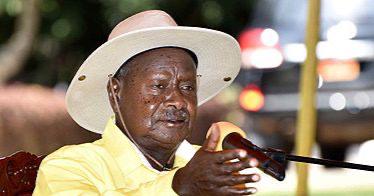
Senile Museveni forget Acholi is part of Uganda
Senile Museveni forget Acholi is part of Uganda
The Acholi sub-region is drowning in poverty and despair, yet the aging despot Museveni seems oblivious to the suffering of these Ugandan citizens. With 60% of the population in Acholi living in absolute poverty and education levels disastrously low, the glossy façade of Gulu City is nothing but a cruel illusion. Venture beyond its borders to places like Koch Lii village, and the harsh reality of Museveni’s neglect becomes painfully clear.
Since 1986, when Museveni clawed his way to power through violence in an election he didn’t win, Acholi has been ravaged by war and abandoned by those in power. Under his watch, both the LRA and his NRA/UPDF forces unleashed unspeakable horrors on the people—massacres, rapes, mass displacements, and the plundering of livestock. Decades later, Museveni’s regime has done nothing to compensate those who endured these atrocities. Instead, it continues to sow distrust by allegedly eliminating prominent Acholi leaders like General Lokech, Colonel Ochola, and the late Rt. Hon. Jacob Oulanyah.
Moreover, while the region cries out for basic needs—hospitals with doctors and equipment, schools that actually educate, and protection from armed herdsmen trampling their lands—Museveni’s regime has the audacity to spend UGX 5 billion on parliamentary extravagance in Gulu. This grotesque display of corruption only underscores how out of touch the regime is with the real, dire needs of the people.
Forests are being destroyed for charcoal, young girls are being forced into marriages by poverty-stricken families, and armed Balalo herdsmen, seemingly supported by the regime, are displacing communities and grazing cattle on land that belongs to the struggling wanainchi. The challenges facing Acholi are immense, yet Museveni’s government continues to treat them as an afterthought.
It’s high time the regime acknowledges the plight of the Acholi and takes real action to address the decades of neglect and abuse. Northern Uganda has suffered long enough under the weight of Museveni’s indifference and corruption. The people of Acholi deserve more than empty promises and flashy displays—they deserve justice, dignity, and the chance to rebuild their lives.
News
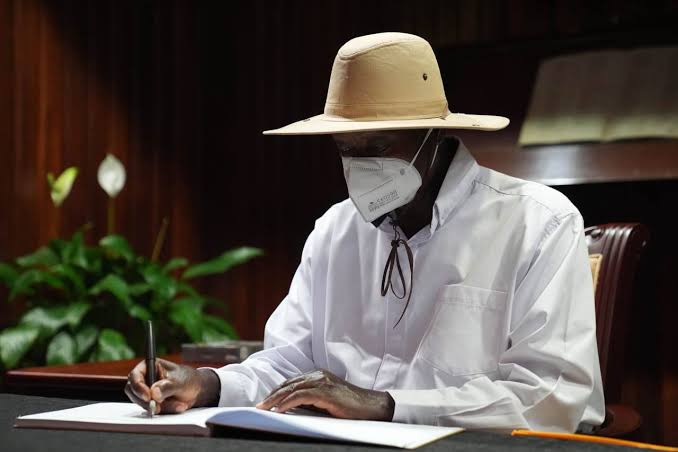
𝐓𝐡𝐞 𝐬𝐭𝐨𝐫𝐲 𝐨𝐟 𝐚 𝐟𝐚𝐜𝐞𝐦𝐚𝐬𝐤: 𝐖𝐡𝐚𝐭 𝐢𝐬 𝐢𝐭 𝐭𝐡𝐚𝐭 𝐚 𝐝𝐢𝐜𝐭𝐚𝐭𝐨𝐫 𝐬𝐮𝐜𝐡 𝐚𝐬 𝐌𝐮𝐬𝐞𝐯𝐞𝐧𝐢 𝐢𝐬 𝐬𝐜𝐚𝐫𝐞𝐝 𝐨𝐟?
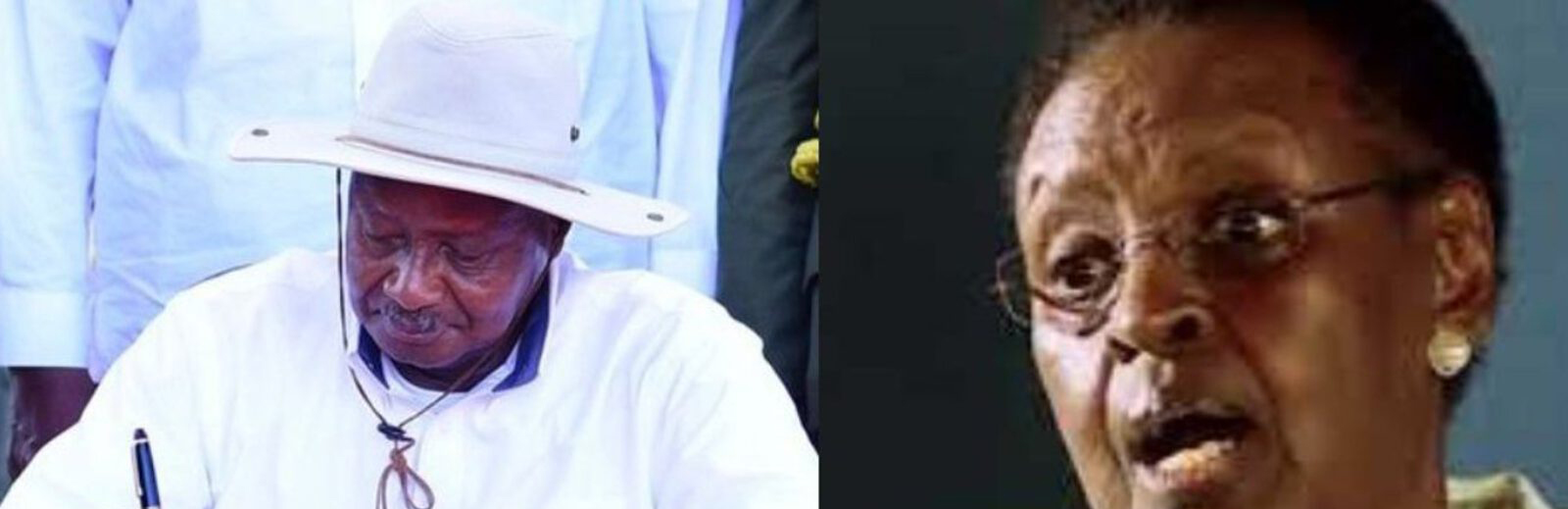
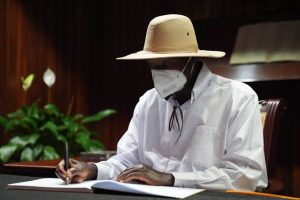
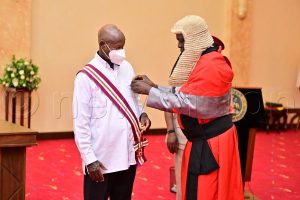
Dictator Museveni’s masked appearance, with a cap pulled so low over his forehead that it seems to be negotiating a secret deal with his eyebrows, presents a striking image of a dude that appears determined to keep the world at arm’s length.
One might think the unknown had just been declared Uganda’s latest national security threat. The mask is firmly in place, the cap is on duty, and the face appears to have been placed under indefinite lockdown.
This is a disorder which is a severe one but let’s dive in.
Only his eyes remain partially visible, watching those around him while the mask covers his nose and mouth and at this point, the eyes appear to be the only government department still open to the public. The nose has disappeared in mabila forest, the mouth has gone into retirement, and the rest of the face seems to have applied for witness protection.
The image raises questions about the relationship between power, personal security and public perception.
For a president who has spent decades at the centre of Uganda’s political system, even ordinary moments of human interaction can become subjects of public scrutiny.
After over four decades in power, perhaps nothing is ordinary anymore. This dying dude can no longer wear a cap and a mask without the nation convening an informal commission of inquiry into his forehead.
If the face were a government ministry, it would be operating under severe budget cuts. Only the eyes would remain functional, and even then, they would be expected to handle communications, public relations, intelligence and emergency response.
There’s however, an important distinction between visible behaviour and private motivation.
A photograph cannot establish whether someone is afraid of illness, concerned about security or simply following medical advice. Nor can a masked appearance justify a medical diagnosis.
Any assessment of Museveni’s personal fears would require evidence beyond his appearance. A mask is not a medical report, and a cap is not a psychiatric assessment. Even political satire must acknowledge that the human face is not a laboratory result.
Although one cannot diagnose a man simply because he looks as though he is preparing to attend a meeting with an invisible enemy. Appearances may be misleading, although some appearances do seem to arrive with their own comedy writers.
Power is often associated with control: control over institutions, public appearances, security arrangements and the people who enter a leader’s immediate environment. But no amount of authority can eliminate uncertainty from human life.
A president can establish protocols, restrict access and surround himself with security personnel, but he cannot control every ordinary interaction or dictate how others interpret his actions.
He can organise the security detail, regulate the guest list, approve the venue and ensure that everyone follows procedure. But he cannot control the public perception.
Ugandans are not fools, it’s evident that Museveni is in critical condition, surviving on the most strict medical regulations and strong medication due to his critical illnesses.
The mask therefore becomes more than a piece of protective clothing in the public imagination. It becomes a symbol of the distance between a leader and the people around him. Whether that distance is intentional or simply a consequence of circumstance, it shapes how the public sees him.
The irony is that a measure intended to provide protection can also create a mystery.
The more the face is concealed, the more curious people become about the person behind it. In politics, hiding something does not always end the conversation. Sometimes it simply gives the conversation a new hat.